The Ultimate Guide to Progressive Overload
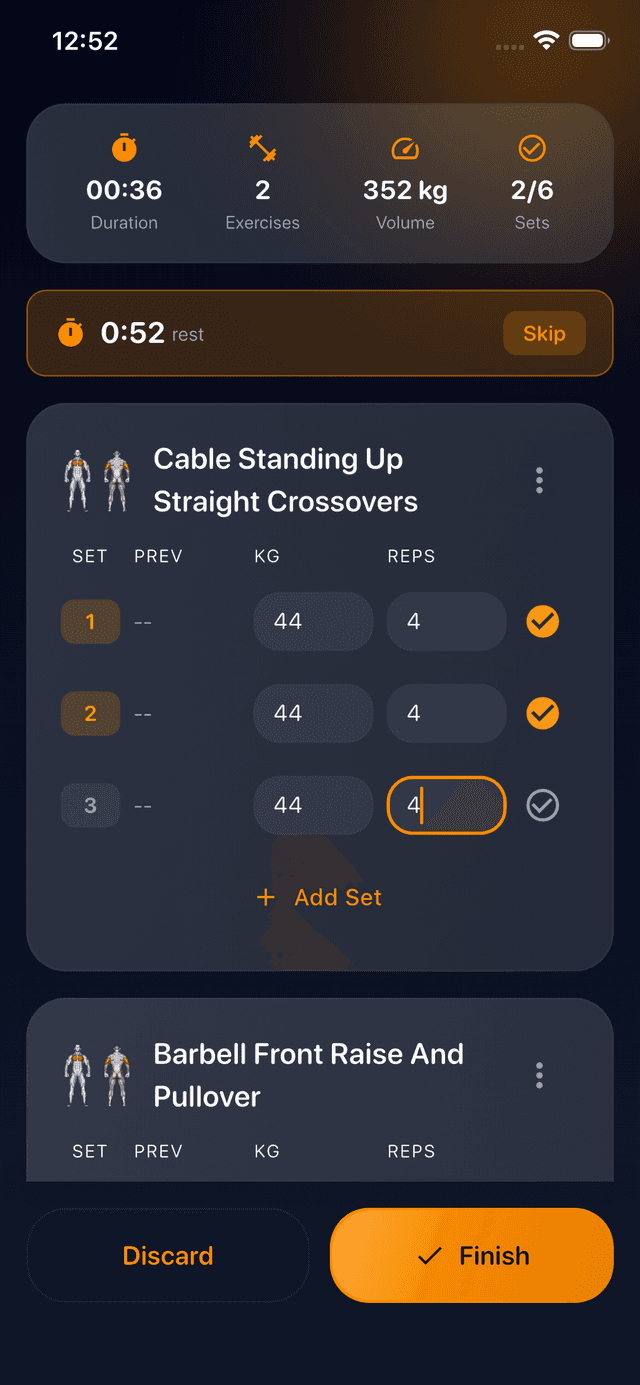
Track this directly in DilFit
DilFit makes logging workout records, monitoring strength metrics, sharing progressive routines, and training alongside partners effortless. Beautiful layouts, custom graphs and full social tracking at your fingertips.
Get App for FreeProgressive overload is the absolute cornerstone of any successful strength or hypertrophy training program. Without it, you are simply exercising—not training. While exercising is great for general health, training implies a targeted adaptation: getting stronger, building more muscle, or enhancing endurance.
At its core, progressive overload is simple: you must continuously challenge your musculoskeletal system with greater resistance or volume to stimulate continuous adaptation. If you lift the exact same weights, for the exact same reps, week after week, your body has no biological incentive to grow or adapt further.
But how do you implement this systematically? Many lifters make the mistake of only trying to increase the weight on the bar. While adding load is the most obvious way to overload, it is far from the only method, and eventually, everyone hits a wall where they cannot simply add 5 lbs every session. Let's look at the multiple ways to apply overload:
1. Increase Weight/Resistance: This is the most traditional model. If you completed 3 sets of 10 at 135 lbs last week, try 140 lbs this week.
2. Increase Repetitions: If 135 lbs feels perfect, try completing 11 reps instead of 10. That extra rep is supplementary work your body wasn't adapted to yet.
3. Increase Sets (Volume): Instead of 3 sets, add a 4th set to increase overall training volume for that muscle group.
4. Improve Form and Control: Doing the same weight and reps but with perfect, slow eccentrics, no momentum, and maximum mind-muscle connection is an incredible, underappreciated form of progressive overload.
5. Decrease Rest Times: Doing the same work in less time forces your cardio-respiratory system and muscles to recover faster, creating a potent conditioning overload.
This is where DilFit becomes your best asset on the gym floor. With localized, per-set logging and an absolute focus on showing your last session's exact reps and weights directly on the tracking interface, you will never have to guess. DilFit keeps a live, non-obtrusive reference to yesterday's performance so your only target is clear: beat the previous session by one rep or half a pound.