Understanding Your Strength Analytics
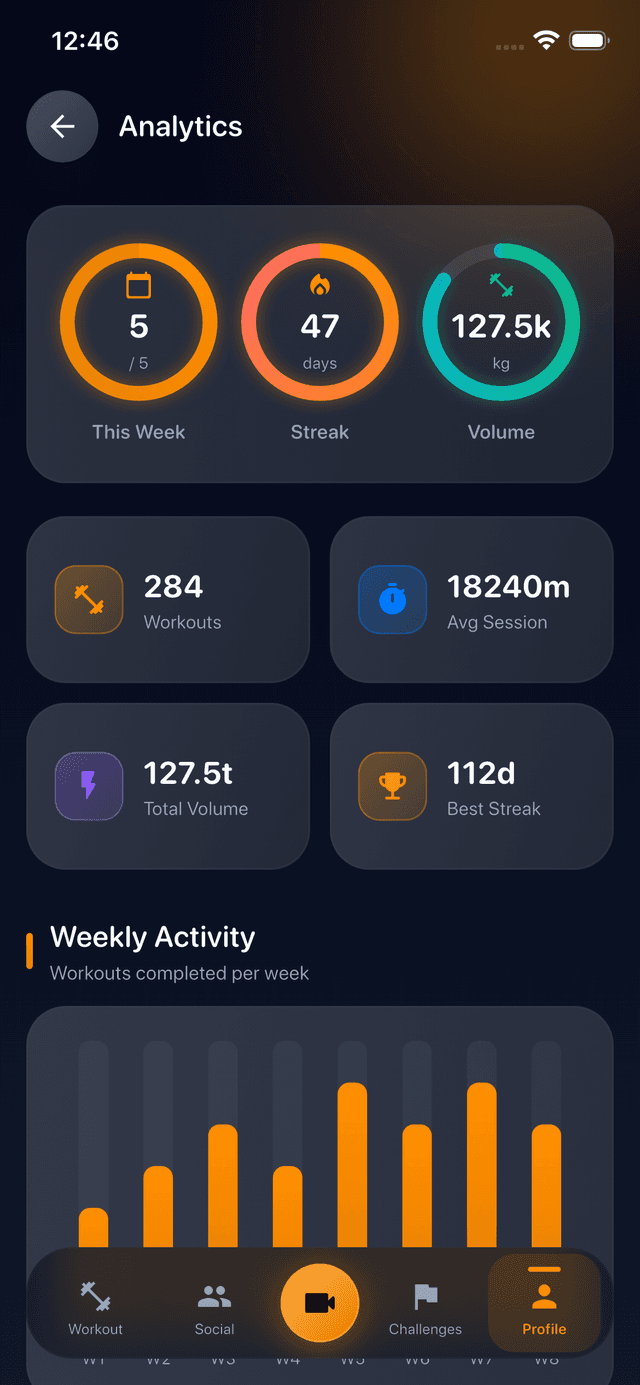
Track this directly in DilFit
DilFit makes logging workout records, monitoring strength metrics, sharing progressive routines, and training alongside partners effortless. Beautiful layouts, custom graphs and full social tracking at your fingertips.
Get App for FreeIn modern fitness, data is your superpower. But having pages of raw numbers is useless if you don't know how to read them. Let's look at the key metrics DilFit tracks for you, and how they directly translate into your muscle and strength gains.
The first and most vital metric is Weekly Training Volume. Calculated as sets × reps × weight, volume represents the total work completed for a specific muscle group. If your weekly volume for chest is trending upward month-over-month, you can be highly confident that you are building chest muscle.
Another critical metric is Workout Frequency and Consistency. DilFit analyzes your weekly streaking to measure how often you stimulate each muscle muscle. Research shows that stimulating a muscle group twice per week is superior to once per week, even with equivalent total volume, due to muscle protein synthesis cycles.
Lastly, look at your Rep Distribution and Load Intensity. The app provides specialized dashboard graphics representing which percentages of your workouts are strength-focused (1-5 reps), hypertrophy-focused (6-12 reps), or endurance-focused (13+ reps). Balancing these based on your specific goals is the difference between plateaus and breakthroughs.
Using the analytics showcase inside DilFit, you can swap between visual charts showing weekly progression, body volume ratios, and historical consistency circles—making sure you let science, not luck, guide your lifter journey.